Quick Answer
Neither ASA nor RYA is universally better.
Both certification systems produce capable sailors when taught well.
For most recreational sailors, the quality of instruction, the amount of hands-on experience, and the level of responsibility given during training matter more than the certification system itself.
Generally speaking:
ASA is often a strong fit for:
- North American sailors
- Future charterers
- Future boat owners
- Recreational cruisers
- People with limited time off who wish to jump start their sailing education
RYA is often a strong fit for:
- International sailors
- Professional pathways
- Commercial maritime careers
- Aspiring sailors who have 1-3 months to invest in RYA training
The best choice depends on your goals.
What Is ASA?
The American Sailing Association (ASA), or recently American Sailing is one of the largest recreational sailing certification organizations in the world.
Its curriculum is designed primarily for recreational sailors.
Most charter companies throughout North America, the Caribbean, the Mediterranean, Asia and the South Pacific recognize ASA Schools certifications.
The most common progression is:
ASA 101
Basic Keelboat Sailing
ASA 103
Basic Coastal Cruising
ASA 104
Bareboat Cruising
ASA 114
Cruising Catamaran
Additional certifications include:
- ASA 105 Coastal Navigation
- ASA 106 Advanced Coastal Cruising
- ASA 118 Docking Endorsement
The system is modular and flexible.
Students often take courses based on their sailing goals. For chartering, international companies will want to see ASA 104 and ASA 114. The same applies to boat ownership as insurance companies will want to see these certifications as a minimum to obtaining insurance.
What Is RYA?
The Royal Yachting Association (RYA) is the United Kingdom’s national governing body for sailing and boating.
Its training system is widely respected internationally.
The RYA pathway generally follows a more structured progression.
Common certifications include:
Competent Crew
Entry-level practical training.
Day Skipper
Coastal cruising and command responsibility.
Coastal Skipper
Advanced coastal operations.
Yachtmaster
One of the most recognized practical sailing qualifications in the world.
The RYA system is frequently associated with both recreational and professional sailing pathways.

The Biggest Misconception About ASA vs RYA
Many discussions online focus on:
“Which system is harder?”
or
“Which certification is more respected?”
These questions are often oversimplified.
The reality is:
A great instructor teaching ASA can produce excellent sailors.
A great instructor teaching RYA can produce excellent sailors.
Likewise:
A poorly taught course in either system may produce weak outcomes.
Instruction quality matters enormously.
Comparing ASA vs RYA
Training Philosophy
ASA
ASA tends to be:
- Modular
- Flexible
- Recreationally focused
- Charter-oriented
Students can often customize their progression based on goals. One of the biggest distinctions of the ASA vs RYA is that 3-4 certifications can be completed in as little as 7-10 days, making this an excellent decision for aspiring sailors who still have others jobs/careers and more limited time.
RYA
RYA tends to be:
- More structured
- Sequential
- Assessment-driven
- Widely recognized as the gold standard for professional mariners
Many students appreciate the clear progression framework. The RYA courses can take 1-3 months full time to complete, and are thus associated with sailors pursuing these certifications as a career.
Recreational Cruising
If your goal is:
- Chartering sailboats
- Cruising with family
- Boat ownership
both systems can work well.
The more important question becomes:
How much practical experience will I gain?
The answer to that question often matters more than just comparing ASA vs RYA
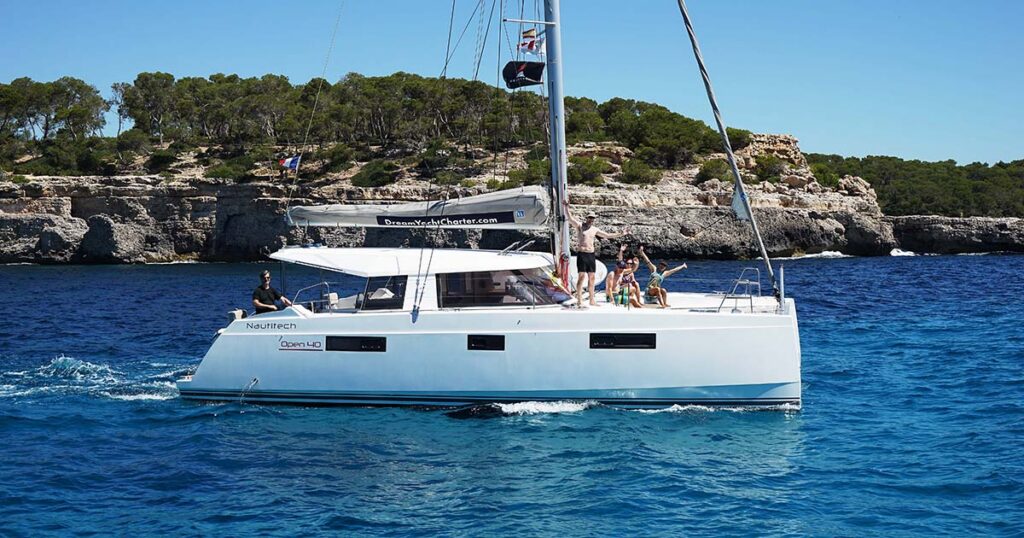
Charter Recognition
Most charter companies accept:
- ASA certifications
- RYA certifications
- Equivalent experience
The specific requirements vary by:
- Location
- Charter company
- Boat type
Most charter operators evaluate both certifications and practical experience. Charter companies care less about the certifying entity, but are more focused on making sure potential charterers have completed an accredited program,
International Recognition
RYA generally enjoys stronger name recognition internationally, specifically in Europe.
This is particularly true in:
- Europe
- Professional sailing environments
- Commercial maritime pathways
However, ASA certifications are also widely recognized throughout major recreational sailing destinations.
Professional Sailing Pathways
For individuals considering:
- Professional skippering
- Commercial maritime work
- Yacht delivery
- Maritime careers
the RYA system may offer certain advantages because of its connection to professional qualification pathways.
For purely recreational sailors, this distinction may be less important.

Boat Ownership
Most insurance companies want to see formal sailing certifications on a person’s resume in order to be able to insure them. This is especially true as the vessel gets larger, and owners are planning on sailing their vessels internationally.
Insurance companies care less about ASA vs RYA, but generally just want to make sure the insured has completed an accredited, structured sailing program.
What Actually Matters More Than Certification?
In our experience, several factors often have a larger impact than the certification system itself.
Instructor Quality
The best instructors teach more than procedures.
They teach:
- Judgment
- Decision-making
- Risk management
This is often where long-term competence develops.
Repetition
A student who docks ten times generally learns more than a student who docks once.
Practical repetition matters.
Responsibility
Students learn faster when they:
- Navigate
- Anchor
- Dock
- Make decisions
Responsibility accelerates competence.
Immersion
Learning tends to accelerate when sailing becomes a daily activity rather than an occasional one.
Immersion increases:
- Repetition
- Retention
- Confidence
Which System Produces Better Sailors?
This is the wrong question.
The better question is:
Which training environment produces better sailors?
A student receiving:
- Excellent instruction
- Frequent practice
- Real responsibility
will often outperform a student with more certifications but less experience.
Competence comes from experience.
Certification documents progress.
Which System Should You Choose?
Choose ASA if:
You are primarily interested in:
- Recreational sailing
- Chartering
- Boat ownership
- Sailing vacations
- Fast tracking your sailing education and do not have several months
Choose RYA if:
You are primarily interested in:
- International sailing pathways
- Professional qualifications
- Commercial opportunities
- Have 1-3 months to dedicate to your sailing training
Either System Can Be Excellent If:
The program includes:
- Hands-on experience
- Responsibility
- Repetition
- Real-world decision-making

Frequently Asked Questions
ASA vs RYA, what is harder?
The systems are different.
Comparisons are often subjective and depend heavily on individual schools and instructors. Overall the RYA programs require more time to complete than similar ASA certifications.
Can I charter with ASA certifications?
Yes.
Most charter companies recognize ASA certifications, particularly ASA 104 & 114 level training and above.
Can I charter with RYA certifications?
Yes.
RYA certifications are widely recognized internationally.
Which certification do charter companies prefer?
Most charter companies are primarily interested in whether you have completed internationally recognized sailing certifications and whether you can safely operate the vessel.
Certifications, experience, sailing résumé, and demonstrated competence all matter, but typically the certification entity does not matter.
Which is quicker to complete, ASA vs RYA?
One of the advantages of the ASA certification is that the basic certifications can be earned in 7-10 days, on an intensive live aboard course.
In contrast, the RYA programs take longer to achieve and will require 1-3 months of training.
Should I switch from ASA vs RYA or vice versa?
Not necessarily.
Many sailors successfully build experience within one system.
The most important factor is continuing to sail. Both certification systems will get you on the water, and it’s then up to you to continue gaining experience.

Final Thoughts
The ASA vs RYA debate often receives more attention than it deserves.
Both systems have produced thousands of capable sailors.
Both systems have launched countless sailing careers, cruising adventures, and boat ownership journeys.
The certification matters.
But it is rarely the deciding factor.
The sailors who progress furthest are usually the sailors who:
- Practice regularly
- Seek responsibility
- Learn from experienced instructors
- Continue sailing after certification
The goal is not to collect credentials.
The goal is not to compare ASA vs RYA for the same sailor.
The goal is to become capable.
And there are multiple paths to that outcome.
Related reading: