QUICK ANSWER
Most beginners do not underestimate beginner sailing, they underestimate what it takes to become competent.
The most common mistake is assuming that learning sailing is primarily about accumulating knowledge, passing certifications, or spending time on a boat.
In reality, becoming a capable sailor is about:
- Repetition
- Responsibility
- Decision-making
- Practical experience
Many people spend months researching sailing schools, certifications, destinations, and boats.
Far fewer spend time thinking about the question that matters most:
What are my personal sailing goals and will I actually be able to do when this course is over?
Here are Nautilus Sailing, we are an American Sailing accredited school. We have helped over 5000 people learn to sail in the last 17 years!
Most of our students come into these courses with little to no sailing experience. In helping students successfully and confidently embark on their sailing journeys, we have consistently seen these recurring mistakes/misconceptions as beginners learn to sail.
It is really interesting to note that most of these mistakes are not practical (i.e. skills related) but actually have to do with mindset and mentality.
Mistake #1: Equating Knowledge with Skills
We live in an age where access to information is fast and easy! There is so much information out there to be garnered from the internet, books and YouTube.
We often get beginner sailing students who have:
- Watched hundreds of hours of YouTube sailing blogs
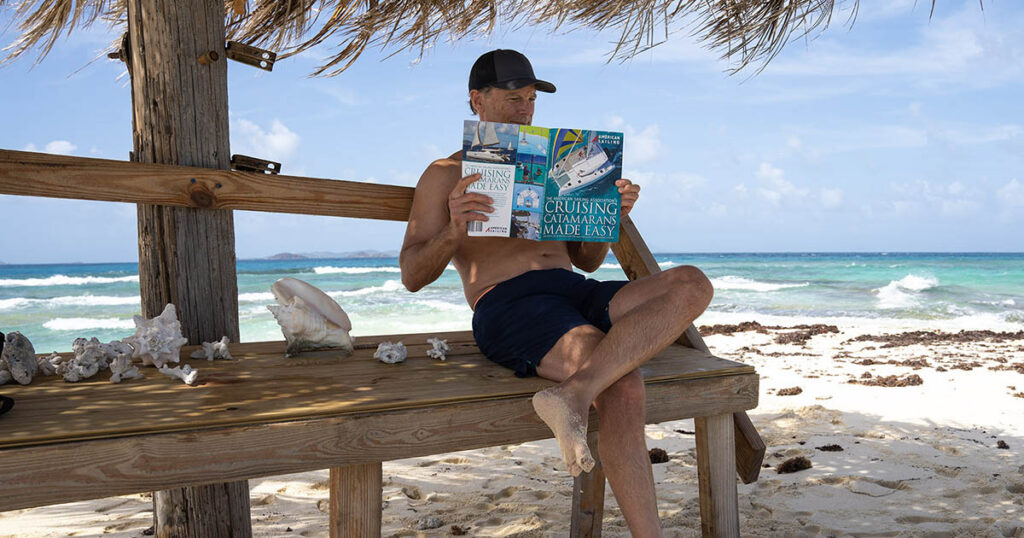
- Read dozens of sailing textbooks and books
- Played American Sailing’s “Sailing Challenge App“
- Researched religiously on the internet
This can all definitely be useful in terms of giving you some of the key beginner sailing knowledge, but definitely DOES NOT replace EXPERIENCE!
Mistake #2: Focusing on Certifications Instead of Skills
Many beginners start by asking:
- Which certification should I get?
- Should I choose ASA or RYA?
- Which course offers the most certifications?
These are reasonable questions.They are just not the most important questions.
A certification is evidence that you completed a program. It is not proof that you can:
- Dock confidently
- Anchor safely
- Navigate independently
- Manage a crew
- Make good decisions
Those abilities come from experience and repetition.
The goal should not be to collect sailing certificates. The goal should be to become capable.
Mistake #3: Believing the Course is the Finish Line
Sometimes new students, at the end of an intensive live aboard beginner sailing course, will say something to the effect of “I thought I’d be ready to sail anywhere in the world, but I’m not”.
When taking a beginner sailing course to learn to sail, the course is not the finish line! You will not have all the skills, experience and mastery you need to be done with learning. A sailing course is not a “one and done” affair.
A beginner sailing course gives you a “license to learn”, and it’s up to you to then put in the time to gain real world experience.
Think of it like getting your driver’s license. When you first pass your driving test, you have a license that allows you to get onto the roads and start driving independently. Are you ready to race Formula 1 cars at 200mph? Probably not.
Mistake #4: Watching Instead of Doing and Participating
This mistake appears on nearly every training boat and course.
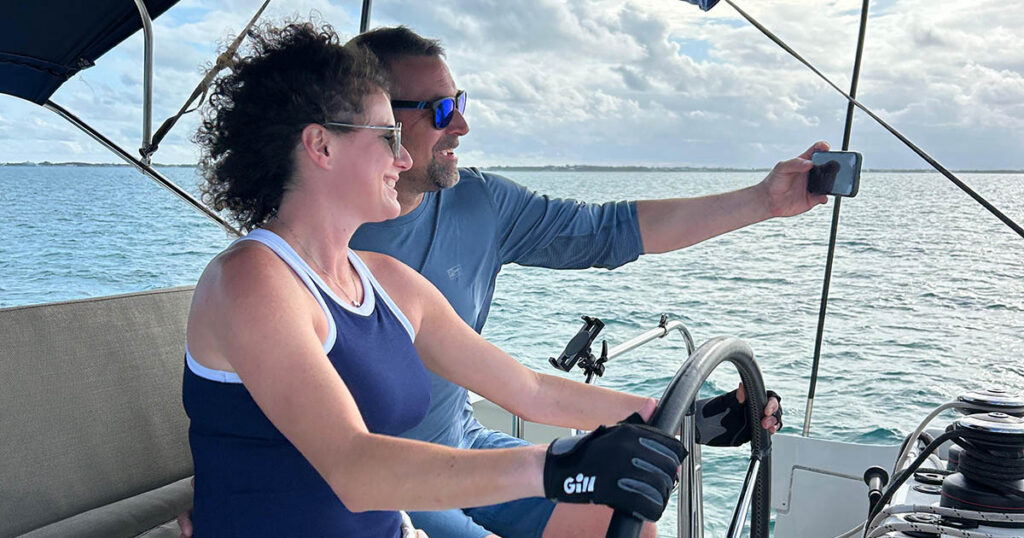
A student thinks “I’ll sit back, watch and observe”. This is a definitely a component of learning, but the true learning is experiential and comes from doing it yourself.
Watching someone dock a boat is not docking.
Watching someone anchor is not anchoring.
Watching someone navigate is not navigating.
Skill develops through participation.
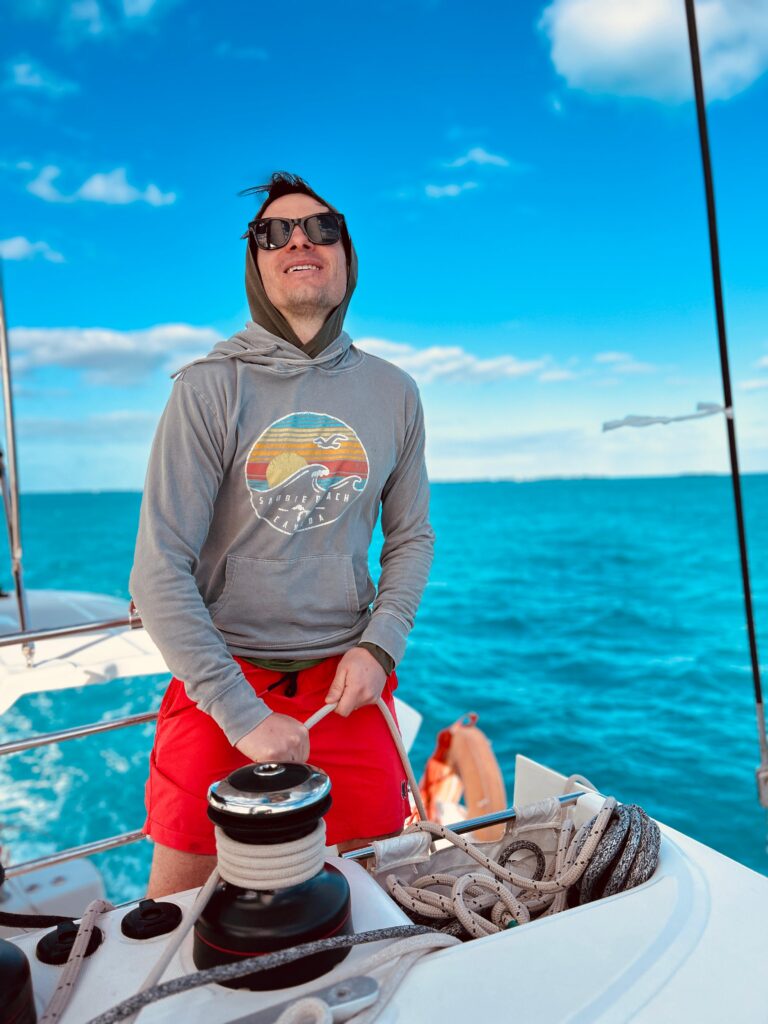
The beginner sailing students who leave with the highest confidence are almost always the students who spent the week actively doing.
Let go of your pride and throw yourself into the experience! Be willing to try things, even if it means you make mistakes and don’t do it perfectly the first time. PRACTICE, PRACTICE, PRACTICE all you can!
Mistake #5: Thinking Sailing is Primarily About Sailing
This surprises many people.
There’s far more to beginner sailing than just raising, and trimming the white flappy things (the sails!)
In a typical cruising week, you may spend time:
- Navigating
- Anchoring and mooring
- Planning routes
- Checking weather
- Managing systems
- Docking
- Communicating with crew
A student who only wants to learn sail trim may be surprised by how much seamanship involves decision-making.
Experienced sailors know:
The hardest part of beginner sailing is often not sailing.
It is judgment.
Mistake #6: Choosing Convenience Over Immersion
This is one of the biggest mistakes beginners make.
A common assumption is “I’ll do short lessons over time”. That approach can work. But it is rarely the fastest path to competence.
Consider two students:
Student A, Let’s call him “Fred”
Fred Sails:
- One day per month
- For seven months
Total: Seven days sailing
Student B, “John”
Sails:
- Seven consecutive days on a liveaboard course
Total: Seven days sailing
Both spent seven days on the water. The outcomes are typically dramatically different. Why?
Because learning compounds. Every lesson builds on the previous lesson.
The more concentrated the experience, the faster skills develop.
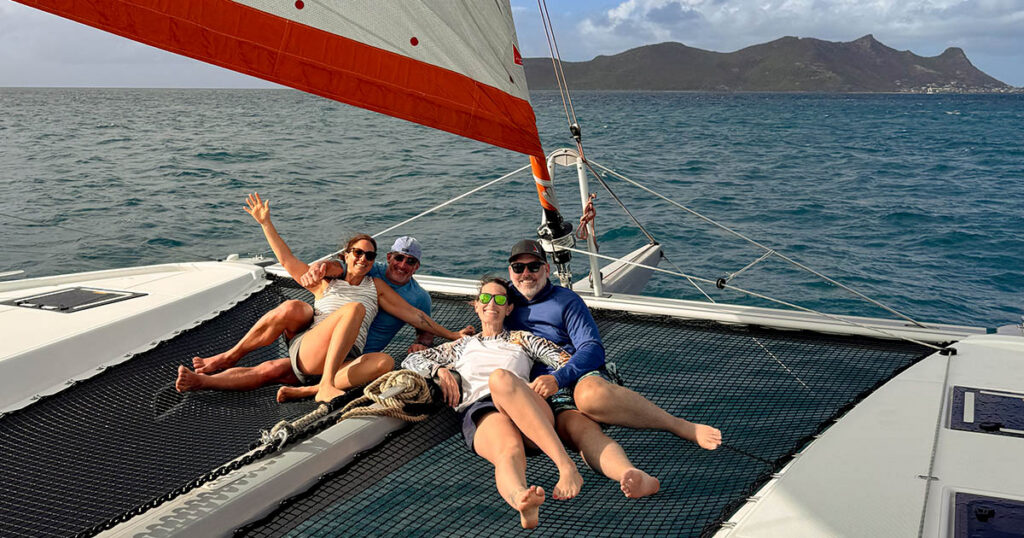
The other huge difference between Fred and John, is that when Fred sails for a day at a time he is not spending nights on the boat and is really not “living aboard”.
Fred arrives at the dock, gets sails ready and motors out to spend the day sailing in protected waters. He returns later that day to the dock. On his daysail, he likely did not use most of the systems onboard a cruising sailboat.
By being on a vessel for a week, day and night, you learn to manage systems. You’ll do anchor watches at night, learn to use stoves for cooking, monitor fridge draws, learn to use the showers and sump pumps and so many more skills that just don’t come from day sailing.
Those 7 days, lead to very different experience levels!

Mistake #7: Trying to Avoid Mistakes
Many beginners arrive wanting to do everything correctly. They are afraid of making mistakes and so are content to lurk in the shadows.
That sounds logical. Unfortunately, it slows learning.
The students who progress fastest are usually the students who:
- Volunteer
- Take the helm
- Dock
- Anchor
- Attempt difficult tasks
Not because they make fewer mistakes.
Because they make more mistakes—and learn from them.
Good instruction creates a safe environment to make mistakes before the consequences become significant.
Did you know that we learn far more from our mistakes than we do from any other form of learning?
Mistake #8: Believing Confidence Comes First
Many beginners think “Once I feel confident, I’ll take more responsibility and be more involved”.
In reality, confidence usually follows competence.
And competence comes from action and experience.
Most sailors gain confidence after:
- Docking successfully
- Anchoring successfully
- Navigating independently
- Handling unexpected situations
- Taking the helm
- Raising and trimming sail
- Participating in tacks and gybes
Waiting for confidence before taking responsibility often delays growth.
Jump in, practice and you’ll see that confidence comes as you gain experience!
Mistake #9: Comparing Yourself to Experienced Sailors
Every sailor has met someone who appears effortlessly skilled. They handle the boat like a pro and make everything look easy.
What you do not see is:
- The mistakes
- The learning curve
- The awkward first docking attempts
- The uncertain first passages
Every experienced sailor started as a beginner.
Comparing your Day 1 to someone else’s Year 10 is not useful.
The only meaningful comparison is “What can I do today that I couldn’t do yesterday”.
What Successful Students Do Differently
The students who progress fastest tend to:
- Ask questions
- Accept feedback
- Volunteer for responsibility
- Practice frequently
- Focus on capability rather than certification
Most importantly, they remain curious.
Good sailors never stop learning.
Beginner Sailing – Frequently Asked Questions
What is the biggest mistake beginners make?
Focusing on certifications instead of experience and competence.
A certificate is valuable.
The ability to safely operate a boat is more valuable.
Is it better to learn slowly or through immersion?
Both approaches can work.
However, immersive training often accelerates learning because skills are reinforced continuously and can lead to deeper experience levels
Should I buy a boat before learning to sail?
Generally, no.
Most people benefit from gaining experience before making ownership decisions. The vast majority of the time you won’t have the experience and knowledge to know the most important things to look for as you shop for a boat. Taking a course first (and ideally living aboard) will open your eyes to those things that matter most to you, and should be top of your list for features and systems you’ll want,
How can I learn faster?
Take responsibility.
Dock.
Anchor.
Navigate.
Volunteer for difficult tasks.
The students who participate most usually learn the fastest. And, DEFINITELY consider a liveaboard course as this will fast track your learning experience and knowledge.
Final Thoughts
Most beginners are asking the wrong question.
They ask “How do I learn beginner sailing” when the better question should be “How do I become a capable sailor?”
Those are not always the same thing.
The fastest path to becoming a sailor is not accumulating information.
It is combining:
- Instruction
- Repetition
- Responsibility
- Experience
The students who understand this early often progress much faster than they ever expected.