Written by: Tim Geisler
Anyone researching how to start sailing runs into the same wall almost immediately: an alphabet soup of certifying bodies, course numbers, and acronyms. ASA. RYA. IYT. Bareboat. Coastal cruising. Competent crew. It is a lot to sort through before you have even left the dock.
So let’s simplify the question. If you are a beginner and your goal is to become a capable sailor, with dreams of either chartering or cruising as efficiently as possible, which sailing certification path actually gets you there?
For most people starting from zero, especially in North America, the answer is the American Sailing pathway — specifically the ASA 101, 103, 104, and 114 progression — and the reason comes down to one practical factor: time.
What Beginners Are Actually Trying to Achieve
Before comparing certifying bodies, it helps to be clear about the goal. Most beginners are not trying to collect certificates. They are trying to build the knowledge, judgment, and hands-on experience to skipper a boat with confidence — ideally reaching the point where a charter company will hand them the keys to a cruising monohull or catamaran.
That endpoint has a name in the ASA system: bareboat charter readiness. It means you can navigate, anchor, dock, manage a boat’s systems, read the weather, communicate with your crew, and take responsibility for the safety of everyone aboard. A sailing certification is a milestone along that road, not the destination — but it is a meaningful and necessary one, because it gives beginners a structured way to measure real progress.
The ASA Path: 101, 103, 104, and 114
The ASA system is built in a straightforward progression:
- ASA 101 (Basic Keelboat Sailing) — the fundamentals: points of sail, basic maneuvers, terminology, and boat handling.
- ASA 103 (Basic Coastal Cruising) — sailing a larger cruising boat, anchoring, docking, and coastal seamanship.
- ASA 104 (Bareboat Cruising) — the sailing certification most charter companies look for, covering full multi-day passage planning, provisioning, and skippering responsibility.
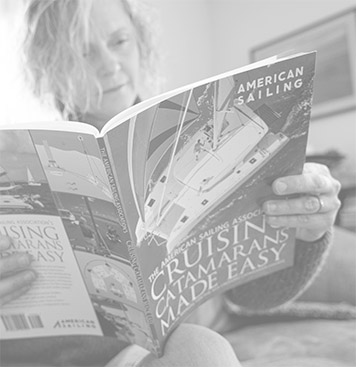
- ASA 114 (Cruising Catamaran) — the multihull-specific systems and handling knowledge, valuable for anyone planning to charter a catamaran.
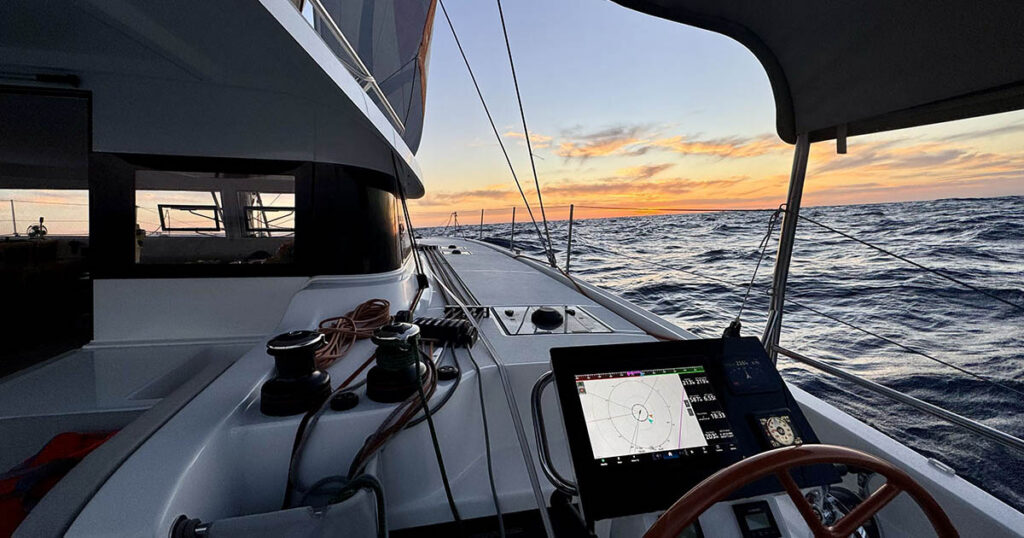
What makes this path especially practical for beginners is that all four sailing certifications can be completed on a single week-long liveaboard course. Rather than treating each course as a separate trip, ASA schools commonly bundle 101, 103, and 104 — and often 114 alongside them — into one immersive week aboard a training vessel. You sleep on the boat, sail every day, and are tested through continual, real-world assessment rather than a single exam at the end.
That structure matters. It means someone with zero sailing background can go from complete beginner to holding four recognized sailing certifications, and frequently, to being genuinely charter-ready, in about seven days.
How This Compares to RYA and Other International Sailing Certifications
The Royal Yachting Association (RYA) is a well-respected and internationally recognized certifying body, and it produces excellent sailors. For future sailors with aspirations of professional careers in the industry, the RYA certifications are the gold standard. However, the RYA path to an equivalent level of competence is structured differently, and it generally takes longer.
To reach a comparable charter-ready standard, most RYA students complete two sequential courses — Competent Crew, followed by Day Skipper — each typically run as its own five-day course. Many schools do offer these back-to-back, but even then the combined timeline usually runs closer to two weeks rather than one. Additionally the RYA has mileage requirements for each sailing certification that typically takes folks longer to log these needed miles. RYA training is often split across separate trips and weekends rather than a single continuous liveaboard week.
For someone who wants to build capability during a single dedicated week — a vacation week, a work sabbatical, a specific window of availability — that difference is significant. The ASA 101–103–104–114 progression is designed around exactly that constraint.
None of this means one system produces a “better” sailor than the other. Both ASA and RYA are built on sound educational standards, and the strongest sailors keep developing experience and judgment long after any certificate is issued. The distinction is about time to a defined level of competence — and for beginners working with a single week, ASA’s bundled course structure is the more direct route there. For a deep dive into the key differences between the RYA and ASA, check out our blog post: ASA vs RYA; Which certifications are right for you?.
What to Look for in a Beginner Course
Whichever path you choose, a few things separate a strong beginner program from a weak one:
- Structured, progressive instruction. Courses should build skill in a deliberate sequence, not just expose you to a boat and hope things stick.
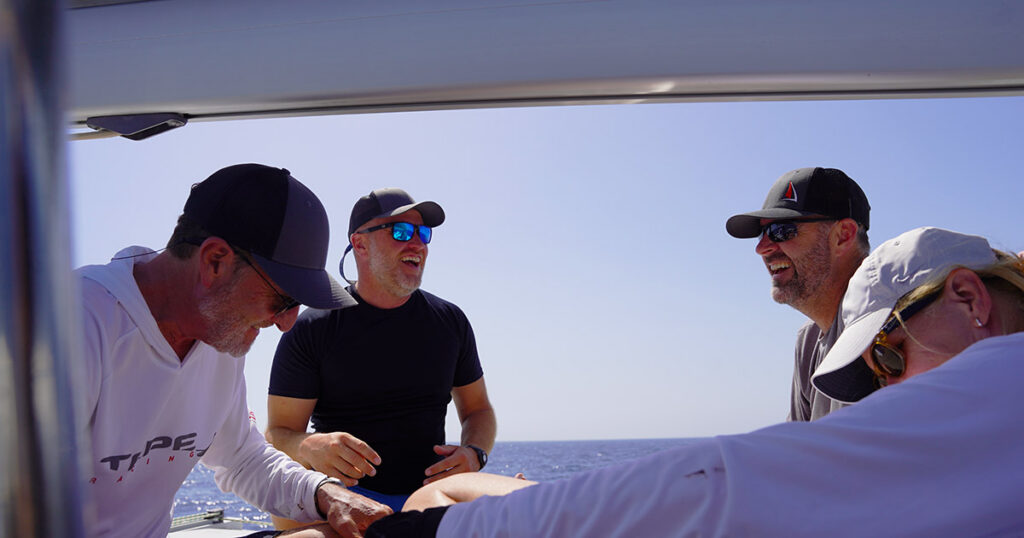
- Real liveaboard immersion. Living aboard means every lesson gets reinforced immediately — navigating, anchoring, docking, and handling systems as part of daily life, not as an abstract lesson.
- Instructors selected for teaching ability, not just sailing ability. Being a skilled sailor and being a skilled teacher are different disciplines. The best programs treat both as essential.
- A clear connection to real-world charter standards. A course that prepares you to actually charter and operate a boat similar in size and complexity to the one you trained on is far more useful than one that ends with a certificate and little else.

The Bottom Line
Sailing certifications provide structure, standards, and a way to measure progress — and they matter. But for a true beginner asking “which path gets me to real, charter-ready capability the fastest,” the ASA 101, 103, 104, and 114 progression stands out because it is built to be completed on a single week-long liveaboard course. International alternatives like RYA are equally credible, but they generally ask for more time and more separate trips to reach the same point.
Either way, the certificate itself is only ever one milestone. What matters most is what happens after it: the decisions made, the miles sailed, and the confidence that gets built one deliberate experience at a time.
For a complete guide to learning how to sail, and how to choose the right school — read: How to Learn to Sail as an Adult: The Complete Guide.
Related reading: