Estimated Read Time: 7–9 minutes
Author: Ben Martin, Nautilus Instructor
Your path depends on where you want sailing to take you.
If you intend to sail recreationally on small boats or crew in protected waters, you may find that formal certification is not your immediate priority. However, if your goal is to take responsibility for a cruising sailboat, navigate international waters, or move toward boat ownership, structured education and recognized skipper certification become essential components of your preparation.
We emphasize a critical distinction: the legal right to operate a vessel is not the same as the capability to do so safely. Depending on your jurisdiction, you may be legally required to hold a basic boating safety license. While we believe foundational safety education is a necessary baseline for every sailor, sailing certification involves much more. It is the transition from understanding rules to developing judgment.
For the future charter skipper and boat owner, we believe the most effective preparation combines formal skipper certification with deliberate, practical experience on vessels similar to those you intend to operate. We view the certificate as evidence of your education; your true objective is becoming a capable sailor.
Is Sailing Certification Legally Required?
No single worldwide sailing license exists. Legal requirements for recreational sailing vary by country, state, and vessel size. You must understand the regulations specific to where you sail.
In many regions, you must complete an approved boating safety course to obtain a competency card. This legal requirement focuses on safety fundamentals, which differs from the comprehensive skills you develop when you learn to sail during a sailing certification program.
A safety course covers navigation rules, equipment, and emergency procedures. We believe these are vital. A sailing skipper certification program builds on this foundation, teaching you sail theory, trim, anchoring, passage planning, and weather interpretation. You gain the judgment that only comes from supervised time on the water. This distinction is the core of your journey toward capability.
Should Every Sailor Take a Boating Safety Course?
We recommend this for everyone. Even when your goals do not require formal sailing certification, taking responsibility for a boat requires a clear understanding of collision avoidance and the legal responsibilities of an operator.
Consider boating safety education your foundation. Your sailing education is the structure you build upon it.
When You May Not Require Sailing Certification
Formal skipper certification is a milestone, but it is not the only path to competence for every sailor.
Casual Sailing. If you sail small vessels in protected coastal areas, you can build real competence through introductory courses and regular practice with experienced sailors. You can develop your skills without immediately pursuing formal certification. I grew up sailing a small keelboat on a lake with no formal education; this taught the fundamentals of how sailboats move on the water.
Crewing for Others. If you primarily want to support another skipper, you generally do not require certification. Crewing provides an excellent opportunity to develop experience. You can spend time on the water through sailing clubs and racing programs to continue your learning journey. A fantastic way to hone your skills and confidence is to hop on a race team. I was lucky enough to crew for a Navy team for 3.5 years. I developed my sail trim and race tactics during this time. Both experiences taught me immeasurable skills without formal skipper certification; I use these skills every single time I’m on the water to this day.
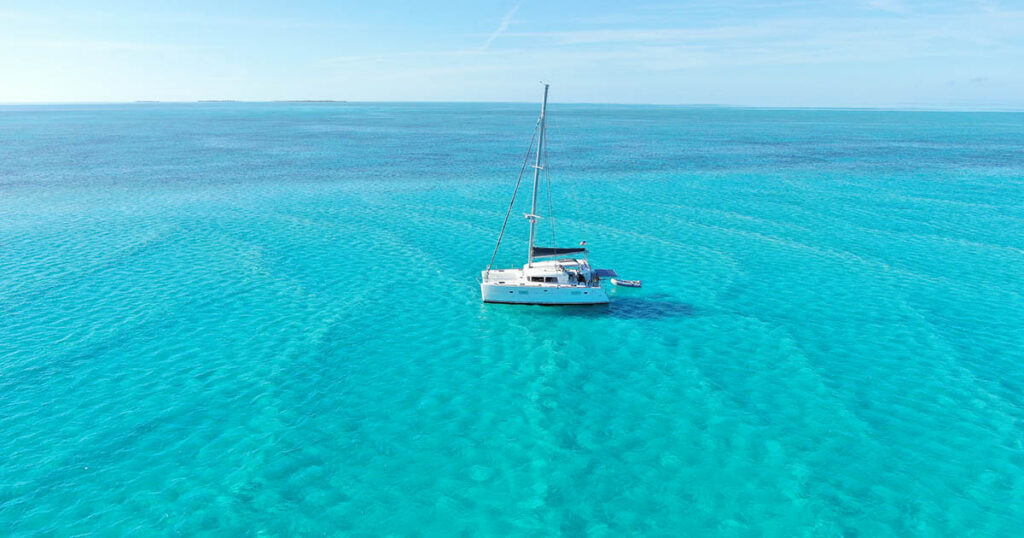
When Skipper Certification Becomes Your Primary Objective
The requirement for structured education increases when you prepare to take responsibility for a cruising vessel. If your goals include bareboat chartering, independent cruising, or boat ownership, you are shifting from participating to leading.
As the person responsible for the safety of the boat and for the safety of everyone aboard, you must ensure your preparation matches the weight of that responsibility. This is where formal education provides the most value.
Do You Need Certification to Charter a Sailboat?
This common question has a nuanced answer. Charter requirements depend on the company and the destination.
Some operators accept documented experience, while others require specific credentials. Ultimately, a charter company must decide if they trust you with their vessel. They evaluate your sailing resume as a whole, looking beyond the certificate alone. However, as we’ve written before, make sure you know well before you pay! Have this conversation with your broker and potential charter company to determine their requirements during the booking process. Some countries, particularly the EU, are now requiring a sailing certification.
I began my first catamaran charter (ever) with only monohull experience. My resume showed years of racing, several offshore deliveries of 1500+ NM as both crew and watch leader, and 20+ weeks of recent charter experience as skipper. I proceeded to make several mistakes just departing the marina! The week continued as expected, me making beginner mistake after beginner mistake. Formal education / skipper certification would have eliminated the vast majority of my errors and changed the week from a disaster to a success.
We recommend you prepare to demonstrate a combination of recognized skipper certification, practical experience, and documented time as a skipper. Rather than asking which certificate you need, ask what combination of education and experience demonstrates that you are capable of operating the boat safely.
Why Similar-Sized Vessel Experience Matters
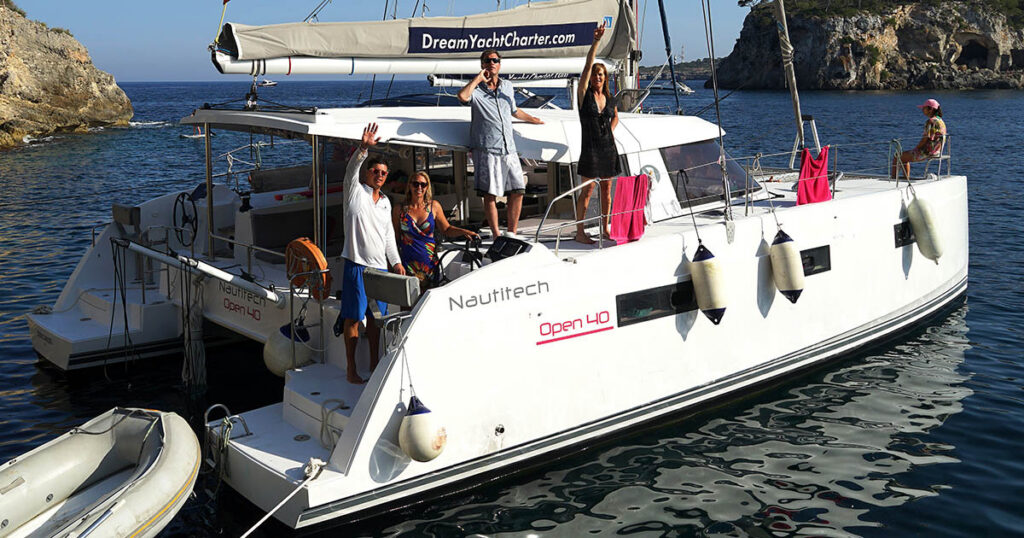
Imagine you want to charter a 45-foot catamaran. If your experience is limited to small keelboats, your resume differs significantly from someone who trained specifically on a cruising catamaran of that size.
Larger vessels introduce different loads, windage, and systems complexity. Maneuvering a cruising catamaran requires specific skills—twin-engine handling, bridle anchoring, and catamaran-specific sail handling. These boats are not necessarily more difficult, but they are different. Familiarity with the vessel type is a core part of your readiness.
If you aim to charter a 40- to 50-foot cruising catamaran, we believe you gain the most value by learning on a vessel of that scale.
What Sailing Certifications Should You Get for Chartering?
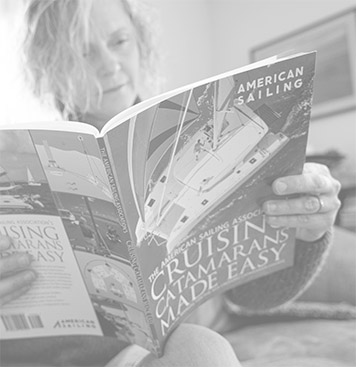
For sailors following the American Sailing pathway, we recommend a core progression: ASA 101 (Basic Keelboat Sailing), ASA 103 (Basic Coastal Cruising), ASA 104 (Bareboat Cruising), and ASA 114 (Cruising Catamaran). These milestones provide a logical foundation, but they must be integrated with practical training to produce a capable skipper.
Is Certification Enough to Make You Charter-Ready?
Certification proves you have met a standard. However, capability requires you to integrate those skills into the daily responsibility of running a cruising vessel.
As a skipper, you must interpret weather, plan routes, navigate, and manage systems simultaneously. You must make decisions when the answer is not obvious. We believe the strongest sailing education combines skipper certification with repetition and real-world application.

What About Boat Ownership?
Certification is a prudent investment if you intend to own a cruising boat. As an owner, you are the steward of the vessel, responsible for its maintenance, systems, and safety.
Ownership introduces maintenance, mechanical and electrical systems, navigation, weather, emergency preparedness, crew safety, and risk management as ongoing responsibilities rather than course subjects. Insurance is also part of the equation: insurers assessing larger or more complex vessels may consider an owner’s training and experience when determining whether to provide coverage and under what conditions. The exact requirements vary considerably by insurer, vessel, and cruising area — skipper certification should never be presented as a guarantee of insurability. But recognised training can be an important part of demonstrating your preparation and broader commitment to seamanship and stewardship.
Certification vs. Experience: Which Matters More?
We believe you should build both in parallel. Skipper certification provides the structured framework; experience develops your judgment.
Skipper certification demonstrates what you have learned, while experience demonstrates what you have done. Capable sailors use education to inform their actions and use their actions to reinforce their education.
Why Your Training Format Matters
Two sailors may hold the same certification but possess different levels of capability. One may have learned on a small training boat, while another spent a week living aboard a modern cruising vessel, making operational decisions in real conditions.
The skipper certification may be the same. The experience behind it is not.
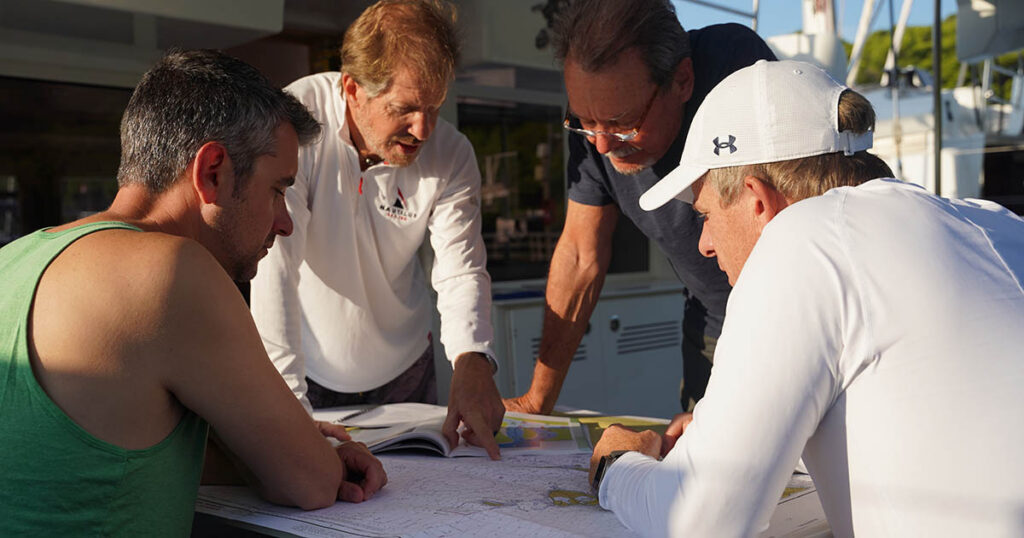
This is why we advocate for liveaboard instruction. You do not simply study cruising; you live it. You practice skills repeatedly in the context where you will use them. By the end of your training, you should be capable of operating the vessel independently rather than under direction. This is the definition of charter-ready.
Sailing is a lifelong pursuit. We aim to provide you with the education, practical skills, and vessel familiarity you need to begin your journey as a capable skipper.
So, Do You Need Sailing Certification?
Your objectives define your educational needs. Start with your goal.
To sail casually: Focus on foundational instruction and boating safety education. Spend time on the water with experienced mentors to build your skills.
To crew: Formal certification is generally not required, but education helps you become a more knowledgeable and effective member of the team.
To charter: Recognized skipper certification is highly valuable and often required. You must build practical experience alongside your credentials to demonstrate capability.
To own a boat: Structured education is an essential investment in your stewardship. Combine it with hands-on experience on vessels similar to the one you hope to own.
Regardless of which path you choose, do not mistake the credential for the objective.
The certificate is evidence of your education. Becoming a capable sailor is the goal.
Frequently Asked Questions
Can I sail without a license? It depends entirely on local law. Many regions require a basic boating safety card to operate any vessel, but this is legally distinct from sailing certification. We emphasize that legal compliance is the bare minimum; sailing certification is the training you need to actually handle your boat safely.
Can I charter without certification? Charter requirements vary by company and destination. Some operators accept documented experience, while others mandate specific credentials. We recommend you build a resume that demonstrates both: recognized sailing certification and recent, documented time at the helm.
Is ASA certification enough to charter? Certification is a vital milestone, but charter operators also evaluate your recent history, vessel familiarity, and time spent as a skipper. Think of certification as your foundation and experience as the proof of your capability.
Do I need ASA 114 to charter a catamaran? While charter companies may occasionally accept documented experience, they are increasingly demanding specific certification for multihulls. ASA 114 provides the dedicated training required for the unique handling, anchoring, and systems of a cruising catamaran. If you intend to charter one, we strongly recommend this certification.
Do I need certification to buy a boat? You can purchase a vessel without formal skipper certification, but insuring and operating it safely is a different matter. We believe education is a fundamental part of responsible ownership and stewardship.
Is certification worth it if I have experience? Yes. Even experienced sailors often find that structured education helps identify knowledge gaps, introduces new techniques, and provides the credentials necessary to satisfy charter companies and insurers.
Related reading: